Mekar yang Diam
Naarm, Melbourne VIC
Dancehouse
2026
— Relation forms without touch
A quiet duet of separation, Mekar yang Diam (silent bloom) is a Bahasa Indonesia phrase that refers to something that became beautiful when you weren’t watching.
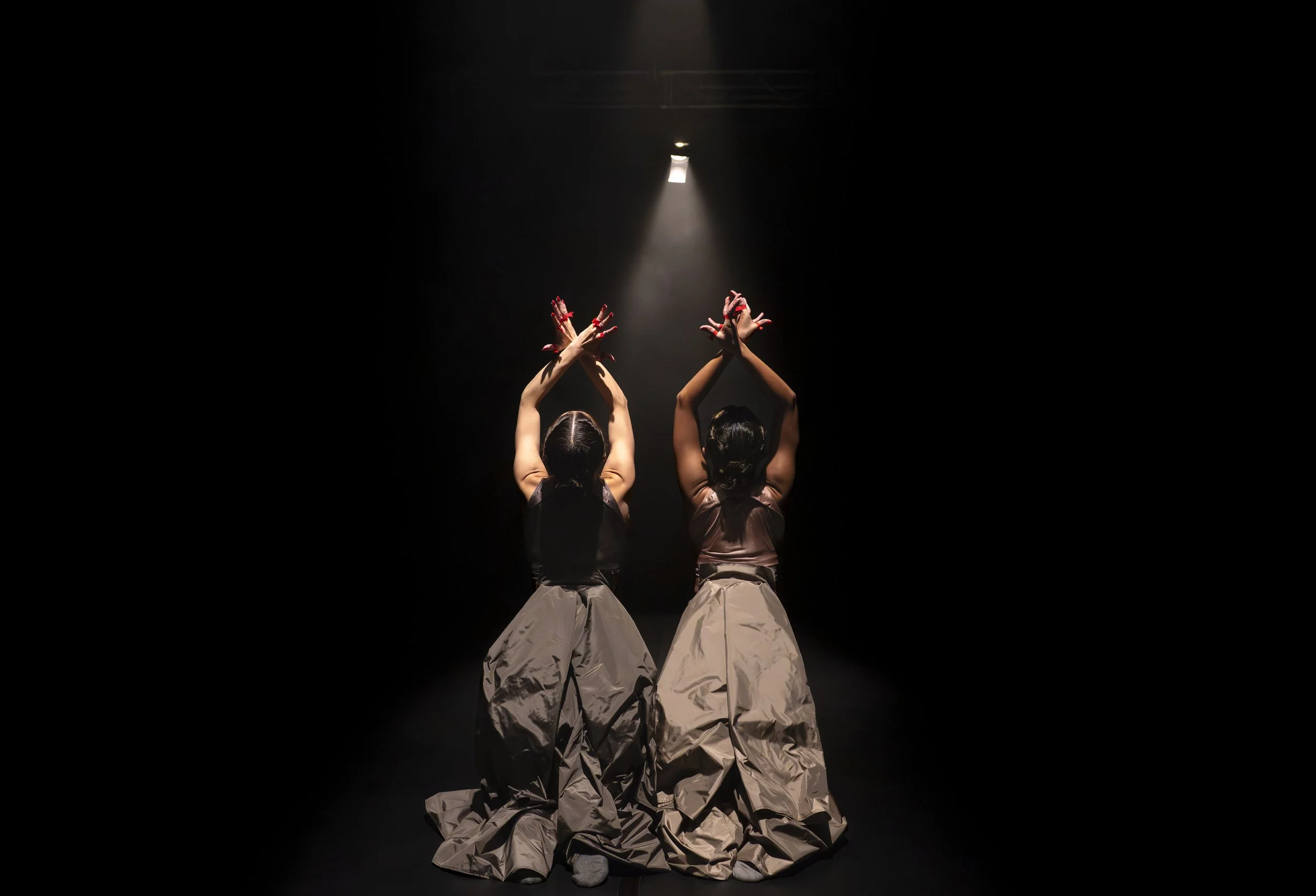
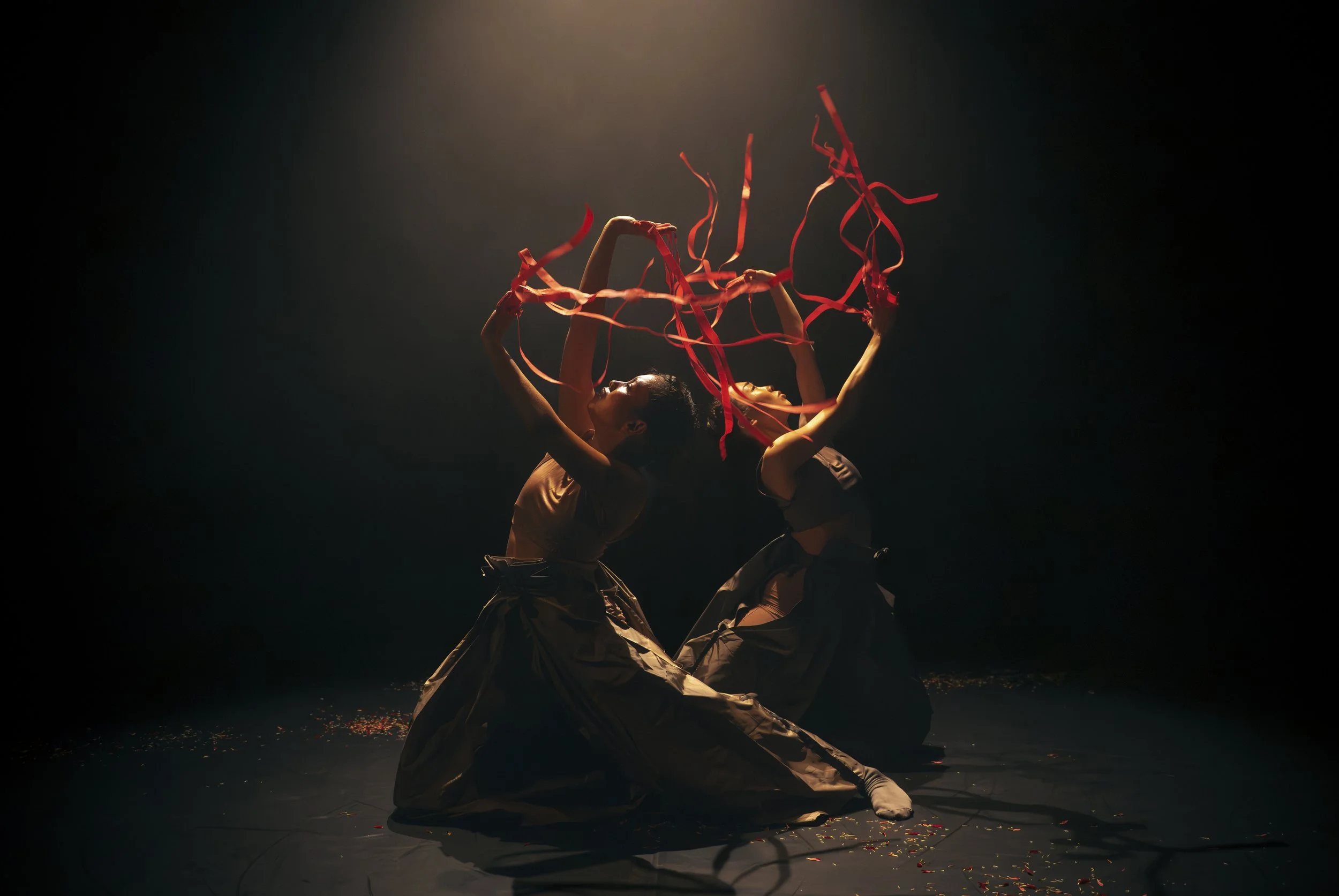
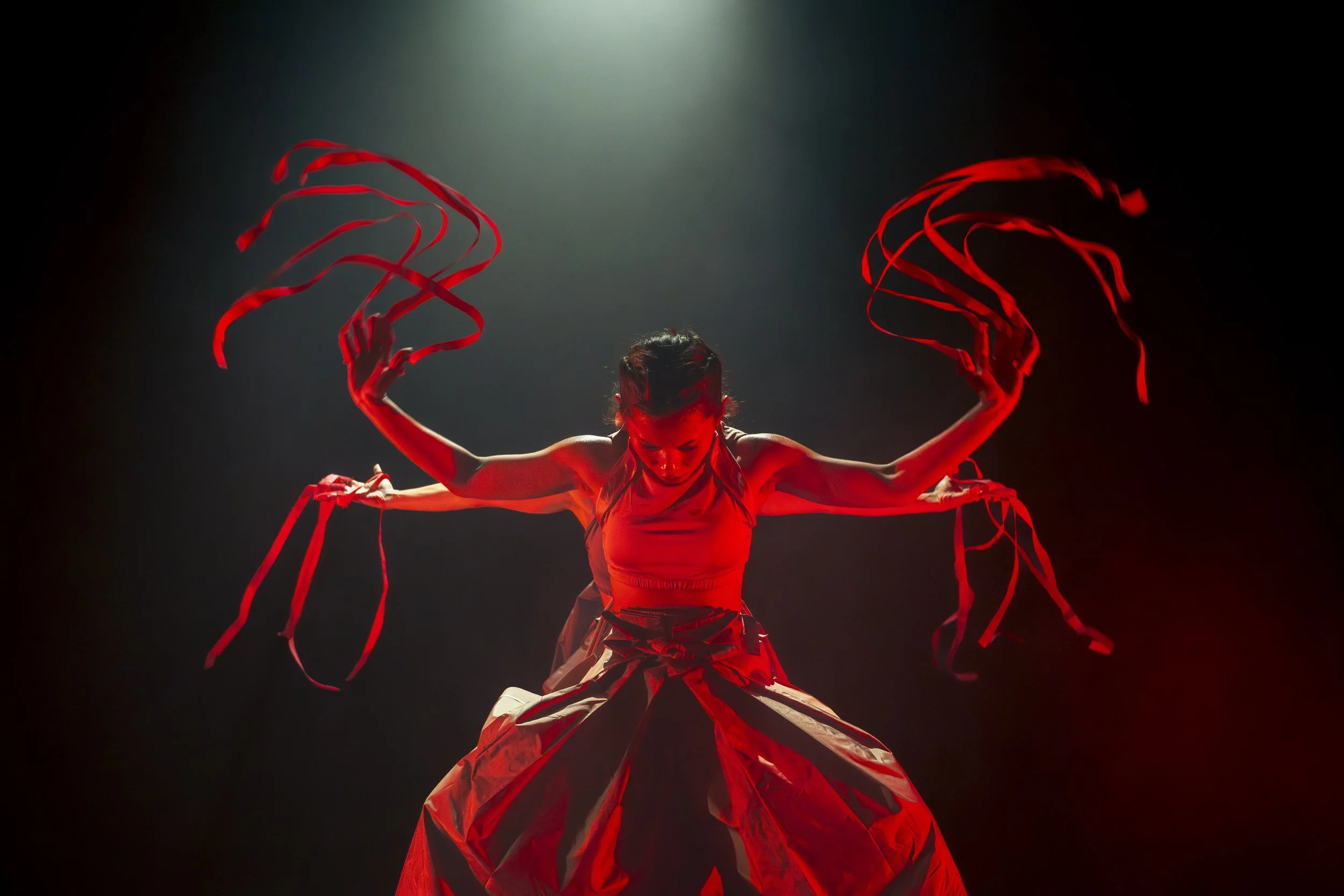
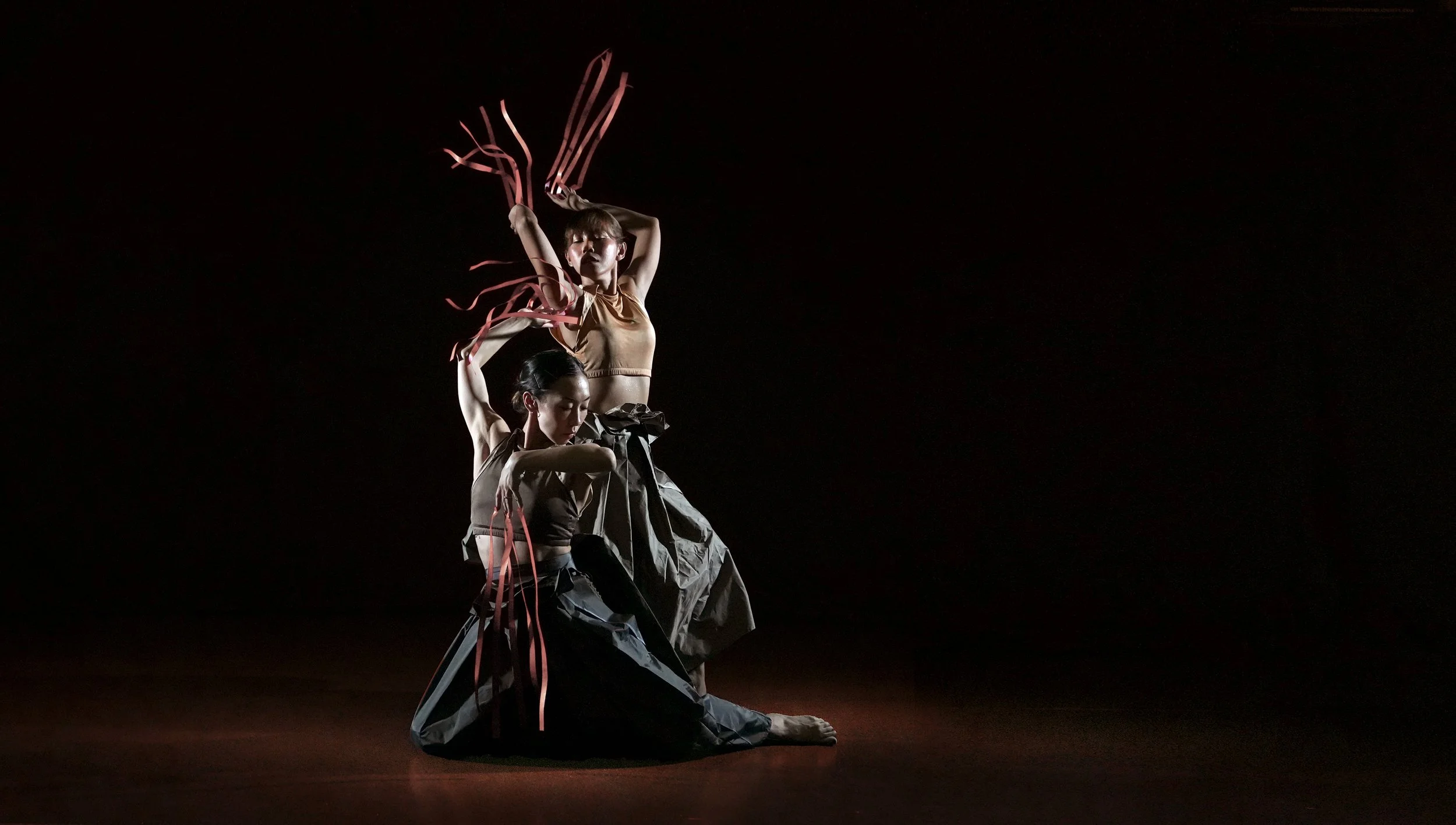
Mekar yang Diam is built around a meeting between two different presences sharing the same space. The bodies do not aim to become one, nor do they confront each other. Instead, they exist side by side, moving as separate lines shaped by the same environment.
Connection appears without direct contact, and distance becomes an active part of the relationship rather than an absence. Each body follows its own rhythm while remaining aware of the other. This creates a form of partnership based on trust: closeness without attachment, mirroring without imitation, and togetherness without loss of individuality.
Spirit in this work is understood as attention. It emerges through stillness, duration, and the willingness to stay with what is quiet. Rather than expressing emotion or narrative, the performance invites the audience to witness a shared landscape where two beings coexist, grounded, and alive.
Choreographers/Performers Yuiko Masukawa, Mekratingrum Hapsari
Composer Rama Parwata
Costume Designer Jack Hancock
Lighting Designer Alexander Nguyen
Producer (LGI) Estelle Conley
Mekar yang Diam was commissioned by LGI as part of the Naarm/Solo Dance Exchange 2024-26. The Naarm/Solo Dance Exchange is presented by LGI in collaboration with EkosDance Company. This project has been assisted by the Australian Government through Creative Australia, its principal arts investment and advisory body. It is supported by Playking Foundation and WXYZ Studios.
Review
“The achievement of Mekar yang Diam, a fine new cross-cultural duet by Yuiko Masukawa and Mekratingrum Hapsari, is its air of quiet ceremony: patient, unhurried movement shaped with real care.”
“This wonderfully solemn and spacious production is the result of a two-year exchange pairing a Melbourne-based choreographer with a Surakarta-based counterpart, with studio time split across both cities.
The work is itself a reflection on collaboration – perhaps because the partnership is partly given rather than chosen. It’s a study in how to share space and time while letting separateness remain felt.
What’s striking is how coherent it all feels. This isn’t a patchwork of influences or ideas. They’ve found a shared sensibility and, as performers, they look very well matched when dancing together.”
★★★★
— The Age, Andrew Fuhrmann-
![]()
Photograogy GregoryLorenzutti
-
![]()
Photograogy GregoryLorenzutti
-
![]()
Photograogy GregoryLorenzutti